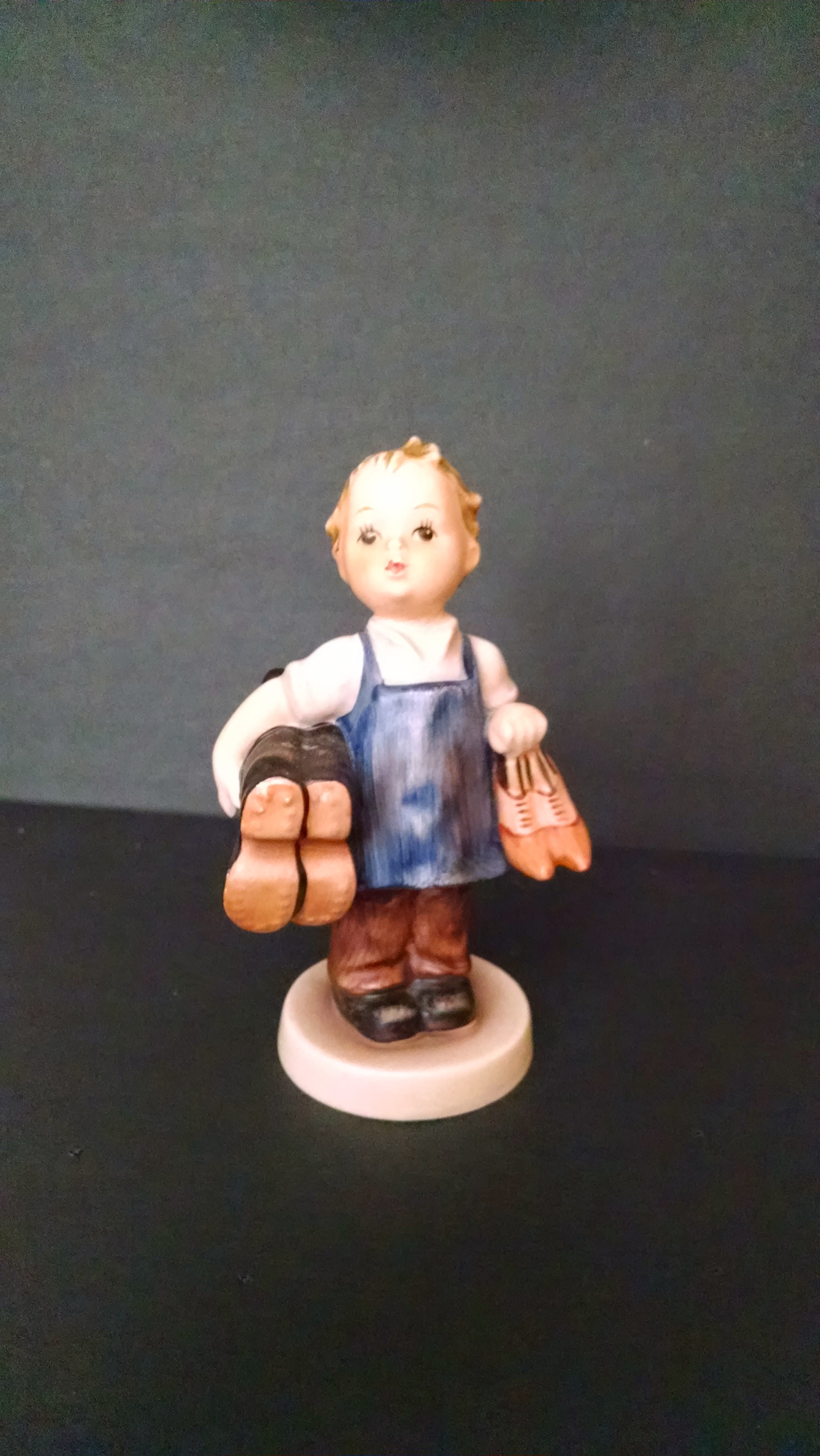
When my grandmother passed away in 1981, my mother and aunt split up a number of the items they liked. My mother got a number of Hummell figurines. The Boot Boy is the only one that survived being damaged over the years. This one in particular is unique in the set that I inherited when my parents’ estate was divided up (my mother and father bought a number of pieces on the trips to Europe). In addition to the Hummell logo and the engraved number, this one is stamped W. Germany — It’s original purchase was made in the post World War 2 era when Germany had been divided between the United States, Great Britain, France (grouped as West Germany or the Federal Republic of Germany) and the USSR (East Germany or the German Democratic Republic). The two were reunified in 1990.
I never understood why East Germany’s official name was the German Democratic Republic because it was a far from Democracy as any totalitarian state at the time.
Now, I never remember seeing this at my parents’ home prior to when I had to inventory the contents of their possessions for my father’s estate (my mother predeceased him by almost 14 years).
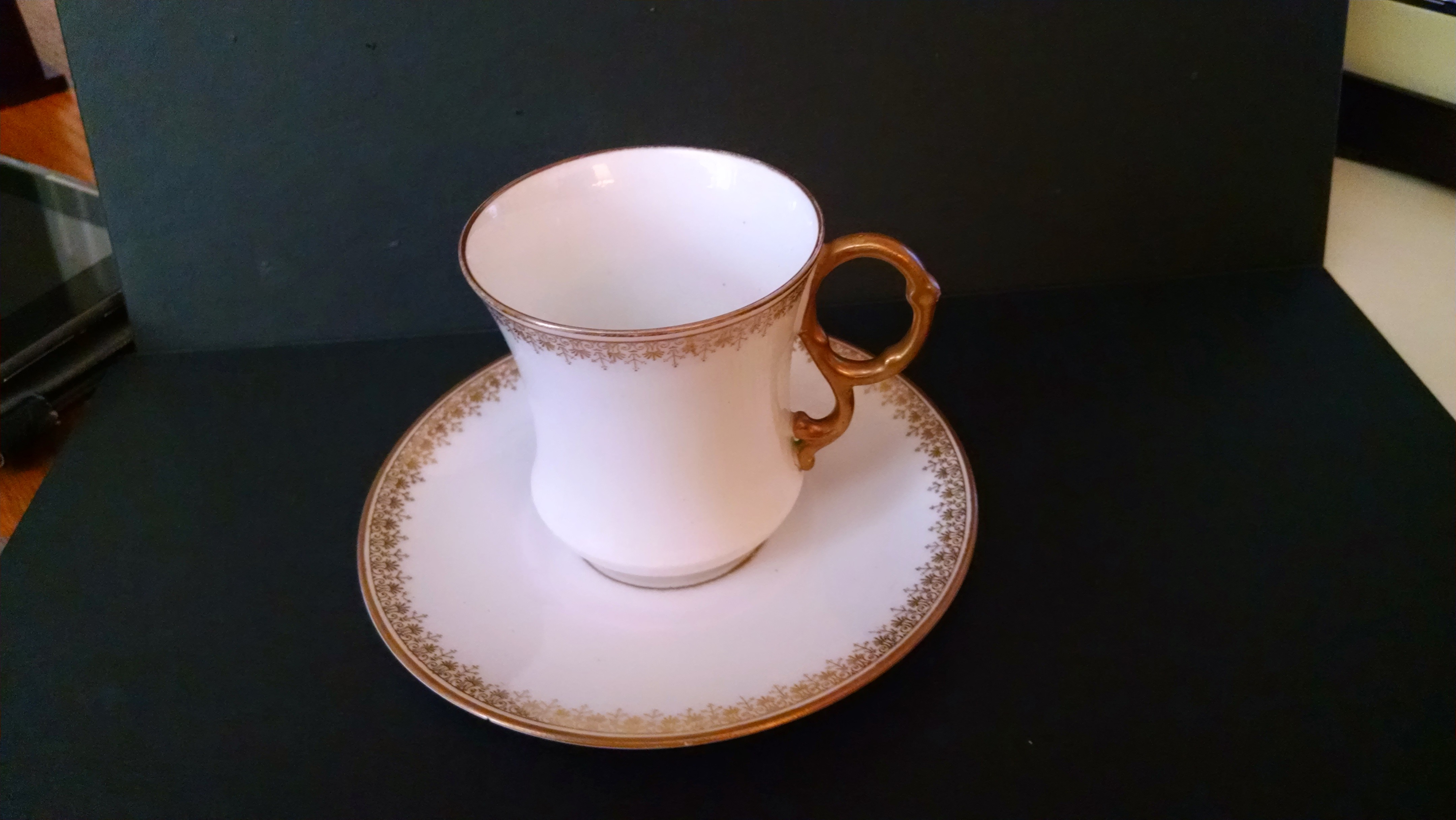
I do have memories of my mother, my aunt, and my grandmother packing up the 4 cousins for a day trip to Windsor, Canada, to make the annual purchase of an English Bone China tea cup and saucer. Of course, Mom used them for coffee. This cup and saucer looks to be older than those items brought from Canada during my childhood. I never remember it at my maternal grandparents’ home either. It is one of the items I just wish I would have been lucky enough to find one of Grandma’s little notes inside to tell where it came from.
Having this and not knowing where it came from and how it eventually ended up in my possession is one of the reasons I switched over to cataloging the items I have received and that no one but me is sure of where it came from.
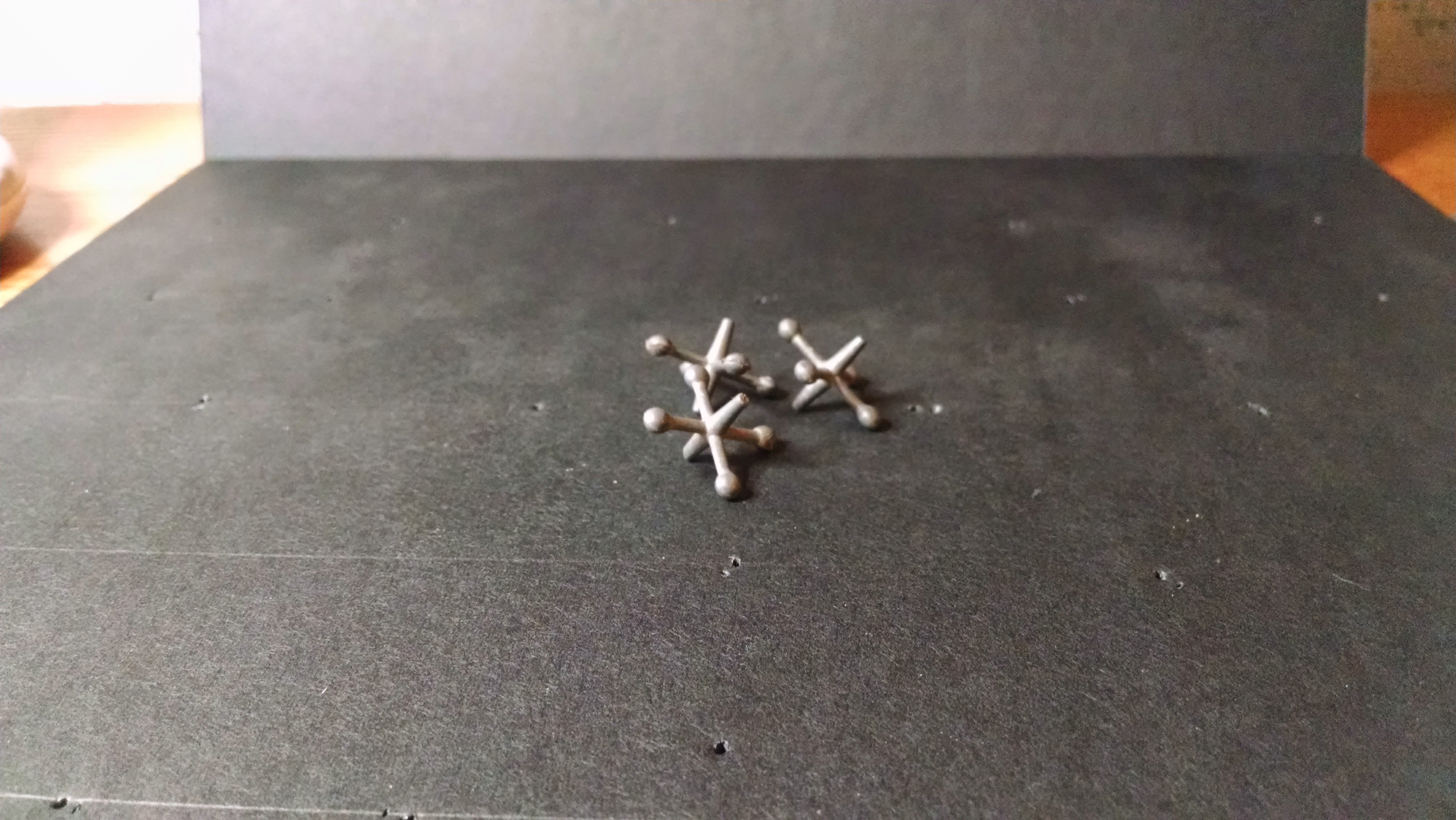
Before there were Barbie Shoes or Legos Blocks to cripple a parent, there were jacks. I can just imaging Grandpa Lee stepping on one and yelling “Leila Marie” or “Jmae Dorothy” as he agonized in pain. Even back then, use of the middle name signified real peril. I am not sure which of the sisters was the owner or might have been the one to leave one on the floor, but the full set and a very “seen better days” rubber ball were still at my grandparents’ house when I was a child. The ball actually looked like the family dog, Pal, may have appropriated it at one time, My mother tried to explain how to play the game, but we were more interested in using them as bowling pins and throwing the gnarly ball at them.
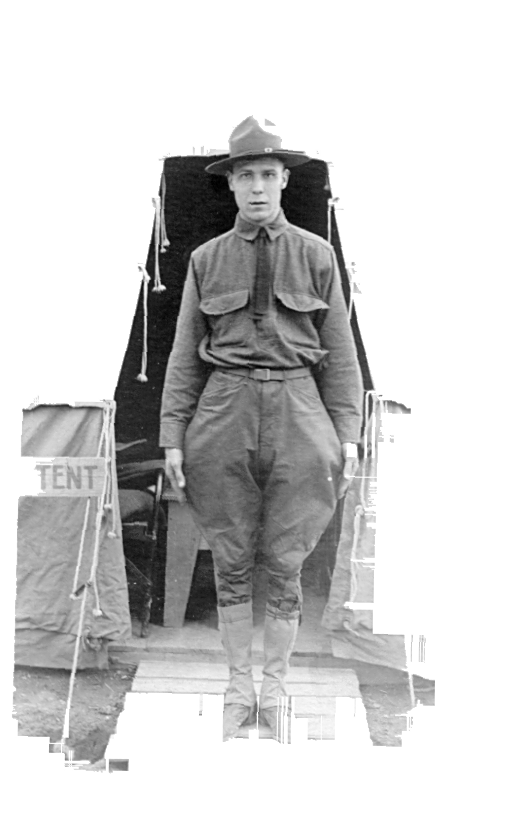
And you needed help to button up your shoes / spats. Not sure if this was my grandmother’s or my grandfather’s (there are those WW I pictures of him in uniform with spats).
Gramdpa Lee in Uniform – WW I – 1918
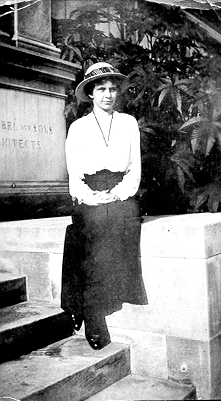
And then there was Grandma Florence with her high top shoes, all buttoned up.
Grandma Florence – approx 1915
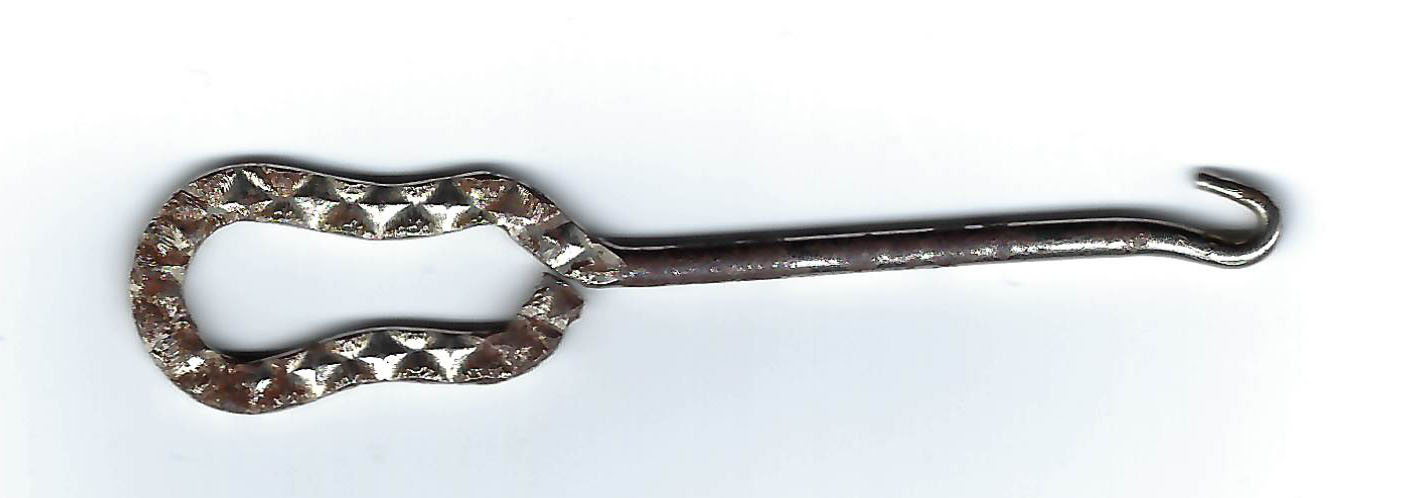
Anyway, I found this button hook among other things that belonged to my grandmother when I was cleaning out my parents’ home. At first, I wondered what the heck it was, but I was able to figure it out with the help of eBay and Google. It is definitely one of those objects, if you didn’t know what is was or what era it had originated, you would be totally confused.
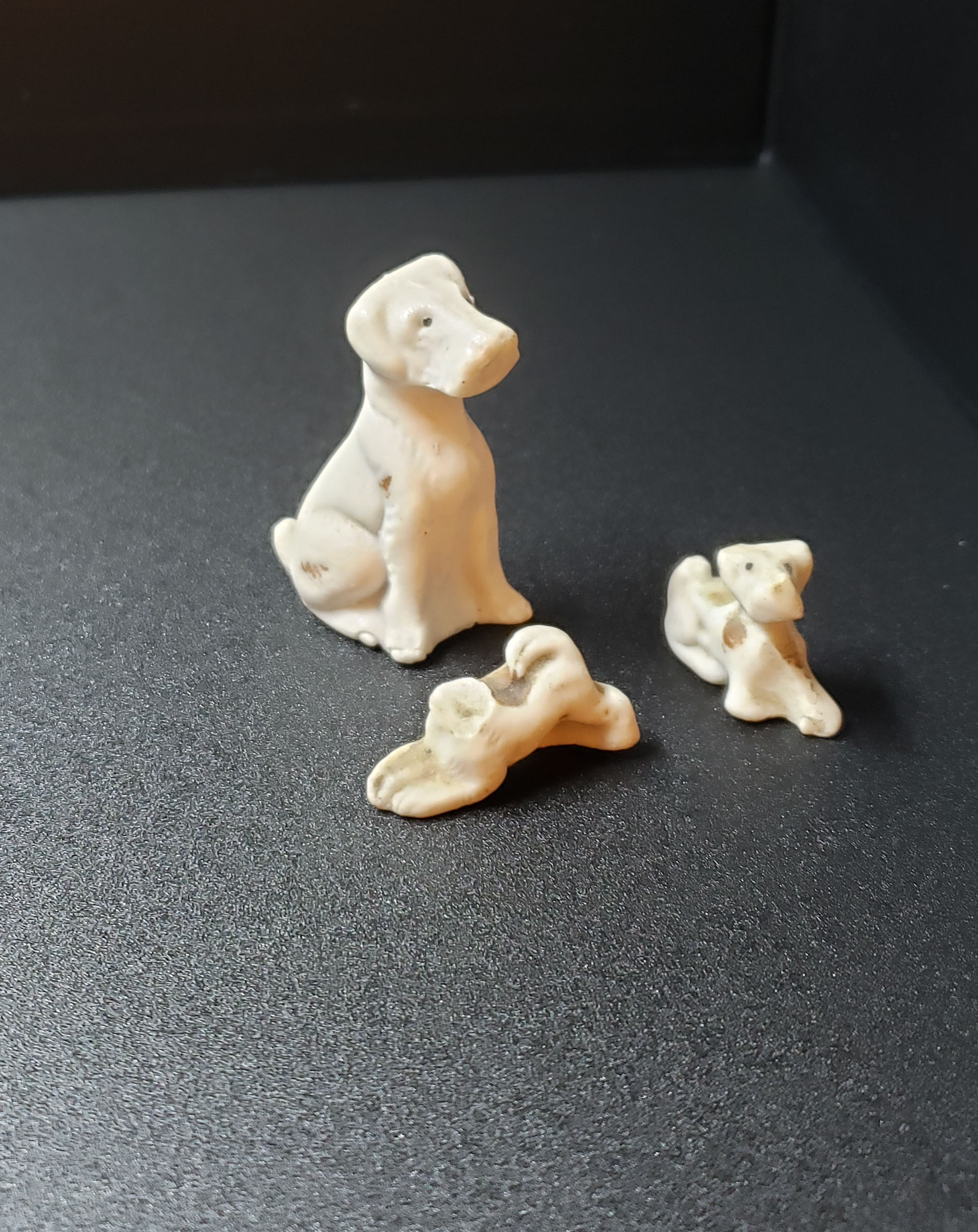
These little dogs (the big one is 2 inches tall) were always on the kitchen windowsill at my parents’ home. They were my mother’s (just like the Coca-Cola bottle). I do not know who broke the one that is missing it’s head or when it occurred. My longest memory is of number 3 being headless. My second longest memory is of Mom forcefully saying “Don’t touch those“.
As a child, my mother’s family had a Wire Hair Fox Terrier (mix) named Pal. The dogs look like the WHFT breed.
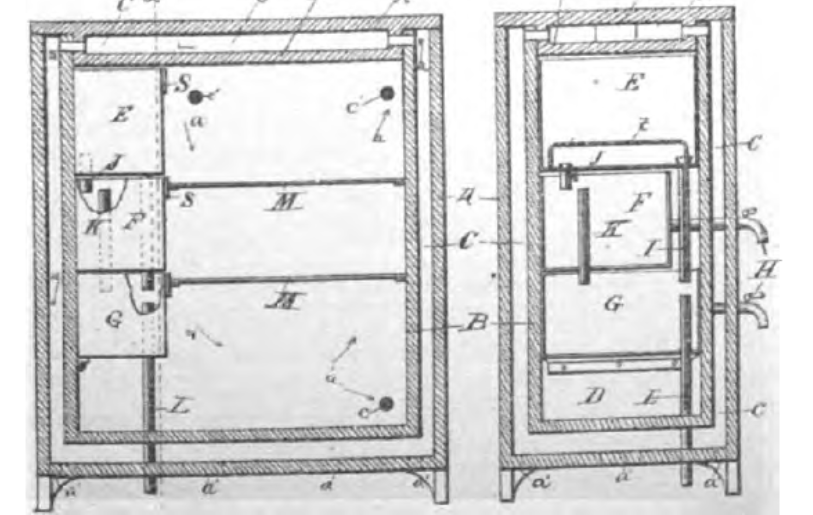
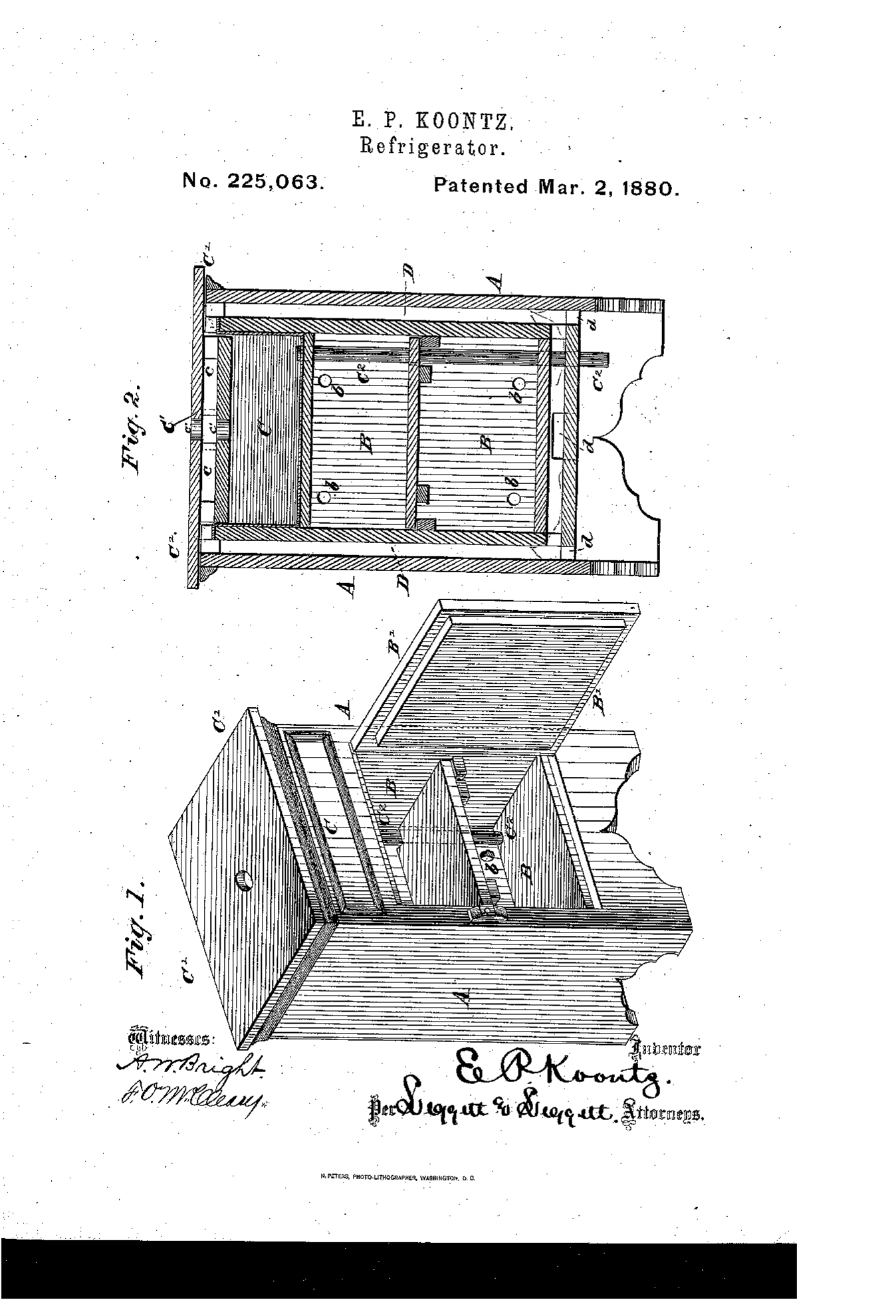
Patent Application 430,963, Refrigerator, Ezra P. Koontz, Ligonier, Ind. Filed Sept. 1, 1888. Serial No. 284,364.
Claim:
1 In a refrigerator, an inner compartment containing an ice-tank, and waste-water tank, in combination with a pipe leading from the bottom of the ice-tank to the waste-water tank, a pipe leading from the bottom of the ice-tank to the drinking-water tank, an overflow pipe extending from the drinking to the waste water tank, and an overflow-pipe leading out of the waste-water tank, all substantially as and for the purpose herein set forth.
2 In a refrigerator, a plurality of tanks, one of which is designed to contain ice, and is located immediately above another which is designed to contain drinking-water, milk, or other fluids, in combination with the pipe connecting said tanks, means, substantially as described, for closing said pipe when the under tank contains a fluid other than water, and means, substantially as described, at the opposite site of said ice-tank extending there from to a point outside the refrigerator, serving to carry off the waste water.
Digest of Decisions of the Commissioner of Patents and of United States Courts in the Matter of Patents, Trade-Marks, &c., Official Gazette – April – June, 1890, page 2061.
From the Patent Ofice
I just happened to find this referenced in an old newspaper that I found while scanning for other information on my Koontz ancestors. Ezra P. Koontz was my grandmother’s grandfather (my great-great grandfather). The second set of drawings make a great deal of sense as Grandfather was a cabinet maker by trade.
Grandma never said, “oh, by the way, my grandfather had a patent on the old-fashioned ice box.” It was not like the child me never gave her an opening. One time while playing at their house (built in 1929), I was playing in the kitchen – cars rolled on the floor better than on the carpet in the living room. I noticed a hole in the floor back in a corner near the stairway to the basement. I asked Grandma why they had a hole in their kitchen floor. All she said was that was where the old ice box used to drain into the basement. And that was it.
We used to visit Grandma and Grandpa when they up at Mullet Lake using the cottage of their long-time friends, Reg and Hazel Adams. In the main room of the cottage was this big chest that was chuck full of toys and games. At one point I was informed that it was an old ice box. Period.
Now, I can go with that Grandma never knew about the patent by her grandfather, or she just never thought it was important now that refrigerators were electric.
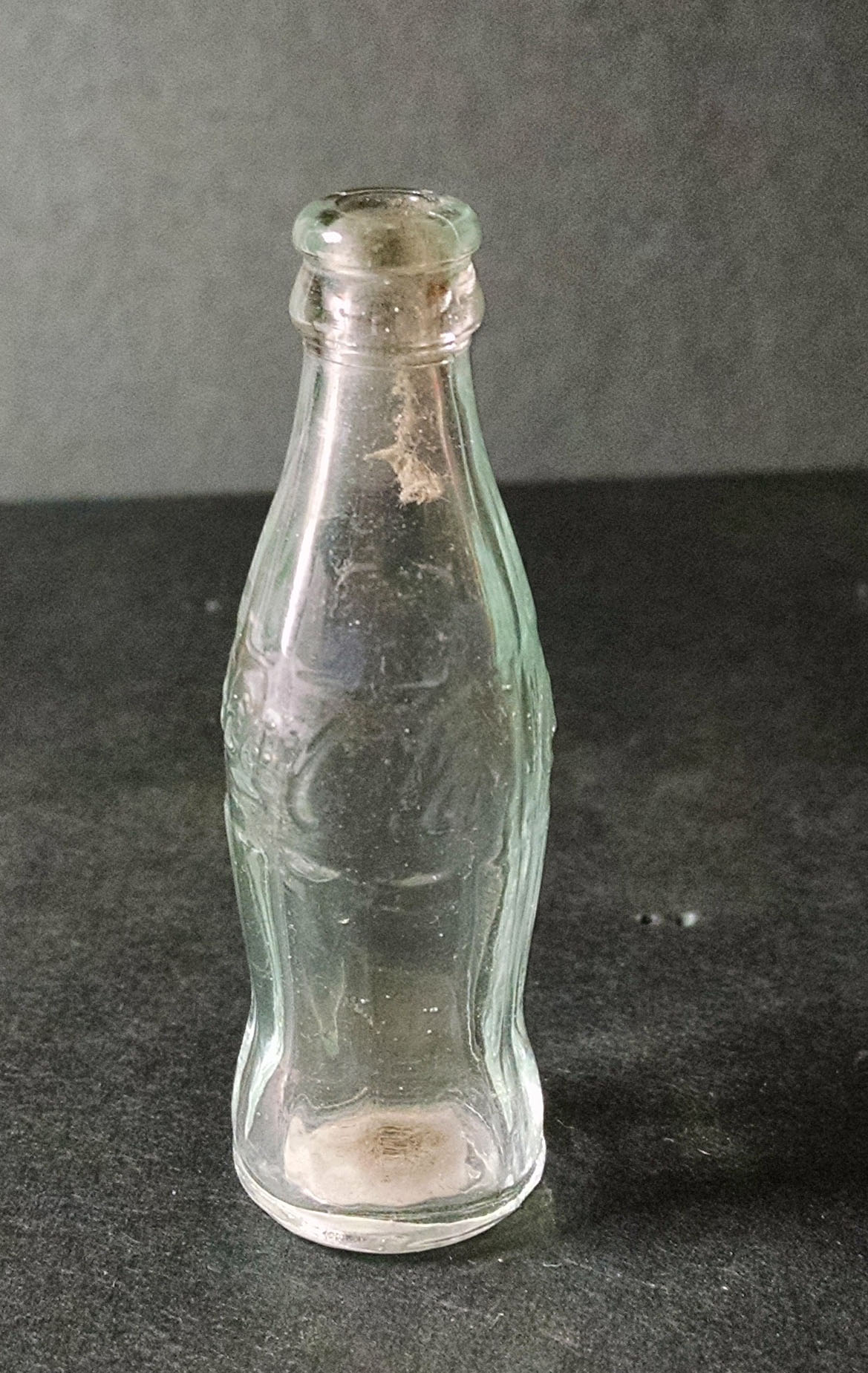
I really do not know why it was always in the kitchen window of my parents’ home. It just was for as long as I can remember. The 2.5 inch bottle was one of the “things” Mom liked to keep on the window sill in the kitchen. Never knew where it came from or why she had it, but there was no mistake it was HERS! It was always there, along with the three dogs that will be in next week’s blog.
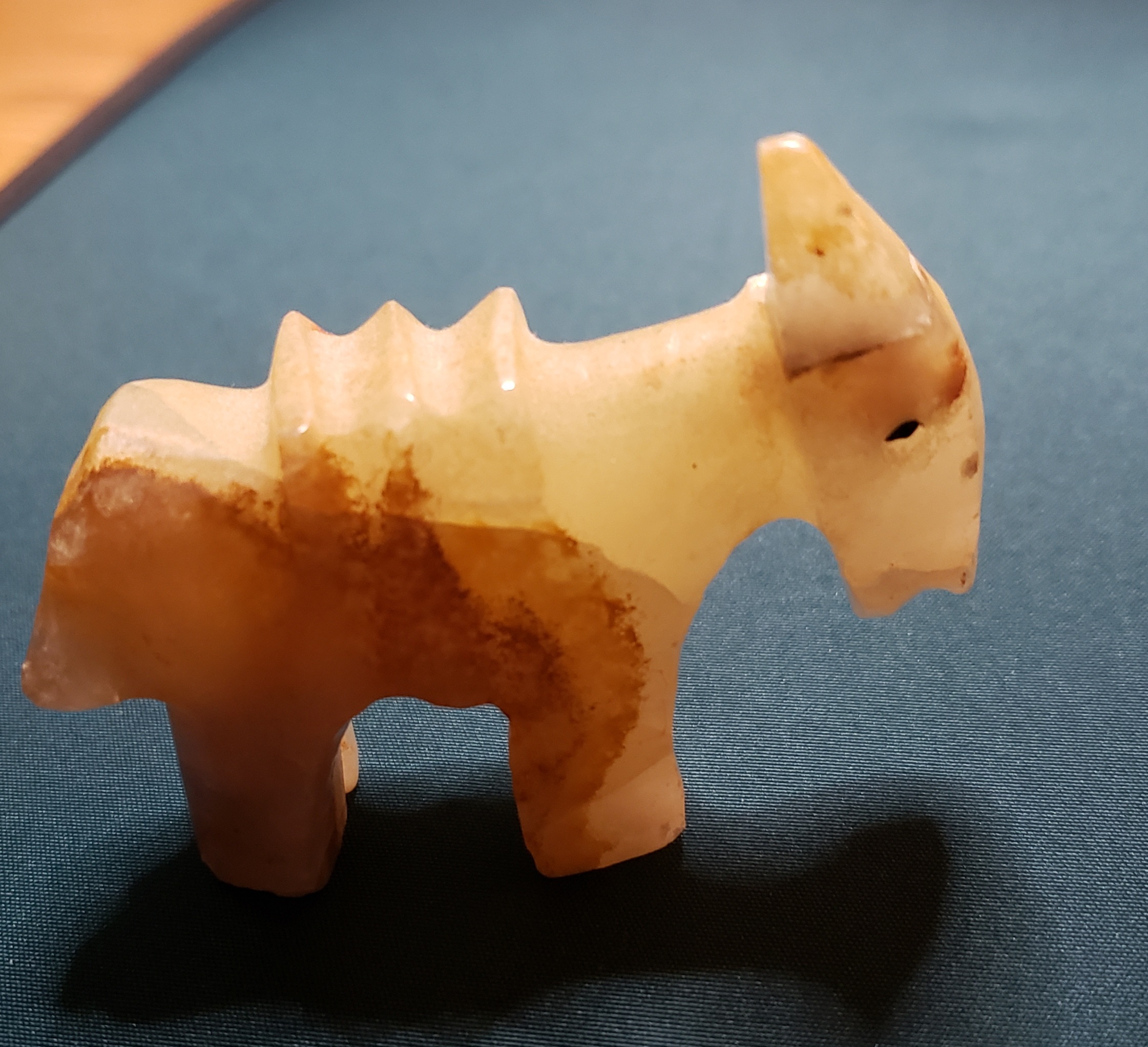
This aged alabaster burro lived in my grandparents’ china cabinet. A souvenir of a trip to Southwest in the 1930s. Never got around to getting more information, but when it was time to split up the things at my parents’ home, I was determined this guy was not going to the estate sale. Since there were no other takers, it is now mine and resides in a shadow box with other heirlooms on the wall of my office.
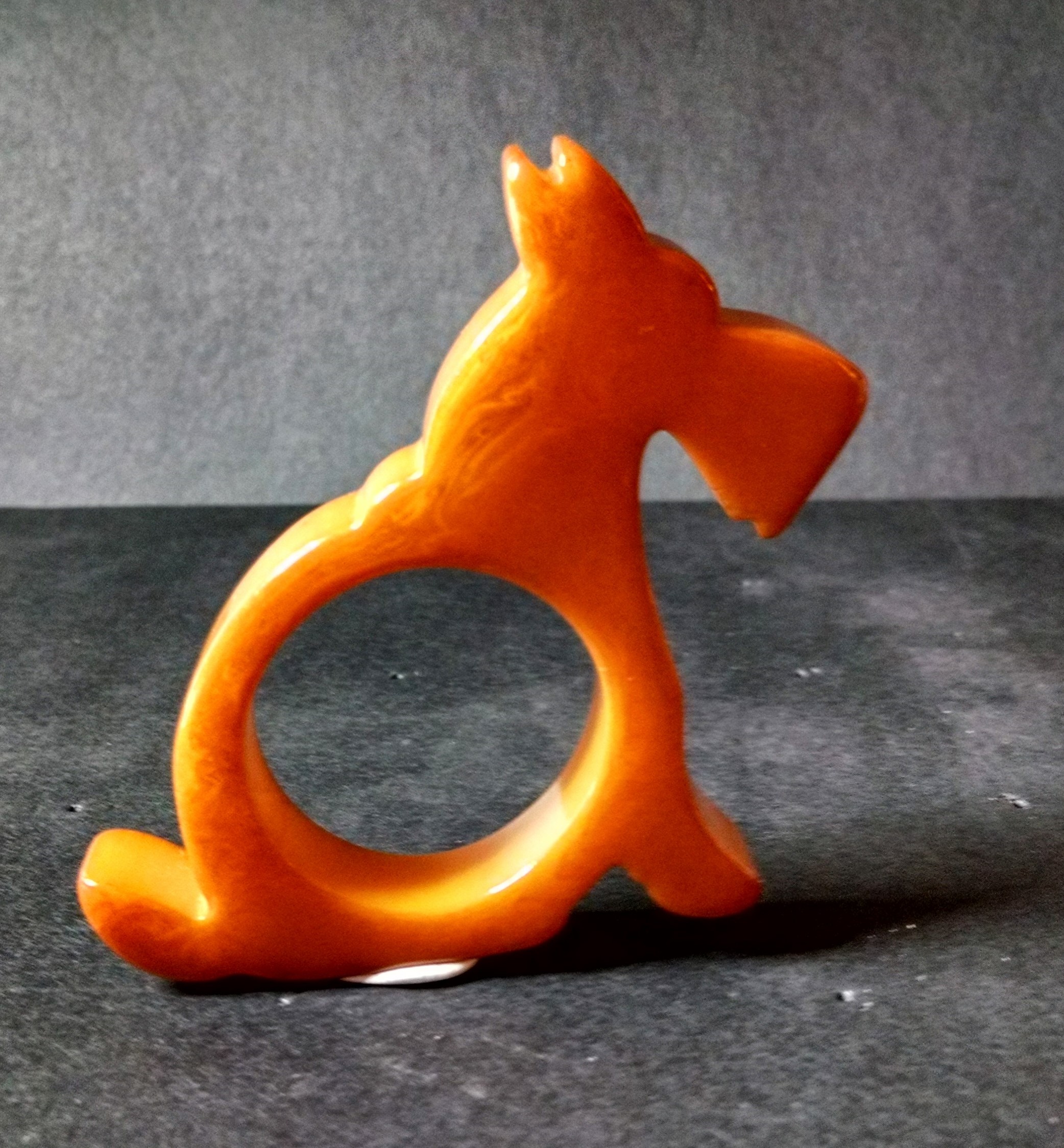
This quirky napkin ring always resided in my grandparents’ china cabinet — right by the Silver one (earlier post). I am not sure what material it is. It almost appears to bakelite.
Some people who are well-versed in Bakelite identification recommend the hot water test as the standard when it comes to accurately identifying this form of plastic. In this method, the piece of plastic is placed under very hot running tap water. The heat from the water releases the formaldehyde-like scent of Bakelite.
I really do not want to do this. Maybe, I will leave it to my heirs to finalize this one.
This tiny salt cellar ended up in my parents’ dining room hutch. It came from my maternal grandmother. It must have been buried in her pitcher collection. As with the silver one earlier, I never experienced the use of a salt cellar myself — I have always been a shaker kind of guy.
The label on the bottom is of a Crown and the word Austria.